
Software security has entered a new era
AI is changing how we find vulnerabilities and build secure software.
Over the past few months, I’ve been using LLMs, including Anthropic’s Mythos, for security audits and software engineering.
I’ve been shocked at how many bugs and vulnerabilities have been hiding in plain sight across the software ecosystem.
Not a few. Not dozens. Hundreds. Yes. You heard that right, it’s a bloodbath! And I’m talking about confirmed findings, not random hallucinations.
Many of these issues have simply gone unnoticed despite years of code reviews, testing, security tooling and developers’ best efforts at following healthy software engineering practices.
I find it both fascinating and a little unsettling to see just how much these models can uncover while we, humans, have been spectacularly good at overlooking them.
More recently, we’ve started to see vulnerabilities being reported and exploited in the wild at an increasing rate (see graph below), because LLM-based agents are making it easier than ever to automate the discovery and exploitation of these vulnerabilities at scale.
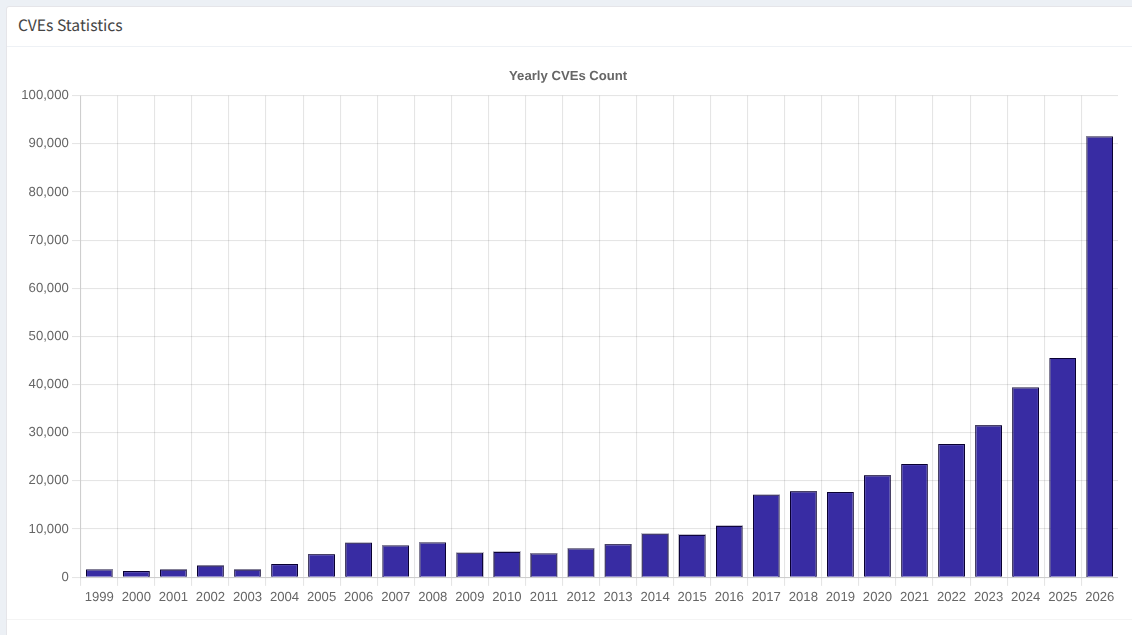
It looks scary, but I’m convinced this will have positive effects in the long run. We’ll probably have to push through a kind of “dark age” of software security first, where vulnerabilities are being discovered and exploited faster than defenders can keep up, until we fully accept and build around the new reality: if a vulnerability exists, we must assume it will eventually be found and exploited, regardless of its impact and cost.
We’ll need to design our systems accordingly, rather than count on certain gaps remaining too obscure or too expensive to be discovered.
That shift in how we build software should start today yesterday. And that’s exactly the direction we took at RA2 TECH. About a year ago, when we saw where things were heading, we decided to build our own LLM-powered security auditing harness and integrate it directly into our development workflow. Instead of waiting for security audits to uncover vulnerabilities, we find and fix issues as we go, before someone else does, and make security a continuous part of development rather than a final checkpoint.
It’s taken quite a few iterations to get the process right, and we learned a lot along the way. I’m really proud of what we’ve built, and even more so of how we’ve created something that empowers developers to take ownership of security as part of their everyday work.
And that’s the real payoff: we feel we’re building safer, more resilient software, while making security a natural part of every developer’s daily work. We still work with security specialists and conduct periodic audits, but we’re in a much stronger position by the time we reach that stage. That means fewer surprises, less back-and-forth with auditors, and ultimately faster release cycles.